DFI Launches Metaruptions Center for Emerging Fields: Redefining Value Creation Beyond Convergence

DFI Metaruptions Center for Emerging Fields: Redefining Value Creation Beyond Convergence
Disruptive Futures Institute’s New Value Creation Pillar for a Liminal World as Conventional Sectors Dissolve and New Fields Emerge
SAN FRANCISCO, CA, UNITED STATES, March 30, 2026 /EINPresswire.com/ -- The Disruptive Futures Institute today announced the formal launch of its new integrated pillar: the DFI Metaruptions Center for Emerging Fields. Building on the Disruptive Futures Institute’s mission to provide strategic intelligence, futures-preparedness, and resiliency, this new practice advises on value creation beyond convergence.
THE DISRUPTIVE FUTURES INSTITUTE’S NEW PILLAR: METARUPTIONS COMPLETES THE SUITE
The launch of the DFI Metaruptions Center for Emerging Fields completes a cohesive ecosystem of futures intelligence, where each of the Disruptive Futures Institute’s six pillars reinforces specific dimensions of our unpredictable world:
• Futures Intelligence & Anticipatory Capabilities: The skills for futures fluency and resiliency.
• Strategic Foresight Advisory - Techistential: The frameworks for adaptive strategies.
• Techistential Center for Human & Artificial Intelligence: The future of agency and decision-making.
• DFI Metaruptions Center for Emerging Fields: The unlocking of value creation beyond convergence.
• DFI Geopolitics Center for Grand Strategy: The navigation of global disorder in a fracturing world.
• DFI Nature & Climate Academy: The transition to sustainable futures.
It is a practitioner-led response to “Disruption 3.0” - an era where systemic change is a steady state rather than a one-time disruptive event.
Under the leadership of Roger Spitz - who identified “Metaruptions” as a defining force of the 2020s as early as 2019 - the Center moves beyond legacy narratives of “Industry Convergence.” While strategy often focuses on trends and the convergence of sectors, the DFI Metaruptions Center for Emerging Fields starts from the perspective that we are already in the “Beyond Convergence” era.
In today’s complex, nonlinear world, predictability is an illusion. The sectors that once converged now dissolve, intersect, and emerge. The clearly delineated industries of yesterday are disappearing. In this liminal world, there are no boundaries. The inflection - the opportunity - emerges as intersections generate breakthroughs and new fields.
“The word ‘Convergence’ is a relic of the digitization age - a comfortable term for an uncomfortable reality,” says Roger Spitz, Chair of the Disruptive Futures Institute. “We are no longer watching industries shake hands; we are witnessing their dissolution. To find value in the 2020s, you don’t look at where sectors collide - you look at the emerging fields born from intersecting old silos.”
BEYOND THE ILLUSION OF INDUSTRY: FROM CONVERGENCE TO EMERGENCE
For the past decades, we have witnessed a deepening convergence. The farm mirrors the factory. The car mirrors the smartphone. When FoodTech resembles Aerospace, entire sectors begin to resemble each other as they combine technologies and capabilities.
This initial shift then forces intersections that reorder and rewrite value chains. Meta is a social network that, through smart glasses, also functions as an optometrist and wearable smartphone. Chip manufacturers are no longer subcontractors; they define the operating system of the car. Power is shifting value chains both vertically and horizontally.
Production is moving from the farm to lab-grown meat and synthetic biology, enabling the engineering of living systems.
In this fused world, the lines between biology, technology, and design do more than blur. From living clothes to semiconductor bees, entirely new fields emerge.
The Case for Structural Ambiguity
Traditional industries face a systemic reckoning beyond the transition away from fossil fuels. As legacy models transform, value is captured in the gaps between old definitions.
Consider NotCo, utilizing an AI platform named “Giuseppe” to combine plant ingredients in ways that challenge traditional R&D logic. While NotMilk is available in thousands of stores, the company’s primary asset is a proprietary B2B dataset of flavor profiles that accelerates R&D for the wider industry. Is NotCo a food company, a dairy producer, a tech platform, or an algorithm? The answer is “yes” to all. That ambiguity is exactly where the value is being created.
The Era of Ubiquitous Synbio
As common as today’s lab-grown burgers, tomorrow may see diamonds without mining, while pharmaceutical products and human organs are grown in controlled environments. We are entering an era of ubiquitous synthetic biology, from CRISPR-enabled gene editing to programmable biological systems.
This is a systemic rewiring: the move toward Cognitive Systems of Existence (CoEx). It reflects synthetic biology becoming programmable, as Brain-Computer Interfaces (BCI) shift the objective from treating illness to engineering wellness.
From AI-native food platforms to energy-integrated mobility ecosystems, companies no longer operate within industries - they operate across emerging fields. By moving beyond traditional sector classifications, the DFI Metaruptions Center for Emerging Fields helps CEOs, boards, and investors identify systemic transitions before they become visible trends - or consensus narratives.
FRAMEWORKS FOR METARUPTIONS
Metaruptions are multidimensional systemic disruptions, including shifts in the notion of disruption itself. These are complex, self-reinforcing forces that transcend mere trends - unpredictable shifts that redefine industries, rewrite rules, and demand a new mindset.
Metaruptions generate widespread, self-perpetuating effects that extend beyond initial disruptions. As changes ripple through systems, they interact, amplify, and modify other elements - ultimately disrupting disruption itself.
Metaruptions are value-neutral: they can lead to breakdowns or breakthroughs depending on our agency, mindset, preparation, and response.
Traditional industry models were built on Newtonian physics - predictable, reducible, and isolated. The Metaruptions Center applies Spitz’s AAA Framework (Antifragile, Anticipatory, Agility) to the complex dynamics of the 2020s.
“Metaruptions are multidimensional and self-reinforcing,” explains Spitz. “They disrupt the very notion of disruption. When BioTech AI platforms redefine drug discovery, or when lab-grown everything moves from lattes to diamonds, you are seeing a systemic shift in how value is created and captured. If your strategy is still based on a ‘sector’ definition, you are managing a ghost.”
The DFI Metaruptions Center for Emerging Fields will offer executive education, strategic foresight advisory, and a specialized keynote series around “The Futures of AI & Digital Disruption: Beyond Convergence,” which explores how the “liminality” between industries, technologies, and capabilities is where the most significant human and financial capital flows are now directed.
OPERATIONALIZING THE FUTURE WITH THE DISRUPTIVE FUTURES INSTITUTE
The DFI Metaruptions Center for Emerging Fields provides leaders with the tools to build “Business Models-as-a-System” (BMaaS), to enable systems innovation.
Value creation in 2026 and beyond emerges as metaruptions interact, cascade, and evolve.
The Disruptive Futures Institute is a global think tank and education platform based in San Francisco, dedicated to futures intelligence, strategic foresight, and decision-making under uncertainty.
For more information on the DFI Metaruptions Center for Emerging Fields:
• Visit www.disruptivefutures.org
• Email: info@disruptivefutures.org
###
APPENDIX: MEDIA BRIEFING NOTES FOR EDITORS
The following briefing pack from Roger Spitz and the Disruptive Futures Institute’s body of work, provides contextual materials and provenance for editors and partners covering the announcement of the DFI Metaruptions Center for Emerging Fields.
I. THE 6 PILLARS OF THE DISRUPTIVE FUTURES INSTITUTE
The DFI ecosystem is designed as an Operating System for Unpredictability:
• Futures Intelligence & Anticipatory Capabilities: The skills for futures fluency and resiliency. Focused on developing the cognitive and operational skills required to scale foresight across an organization.
• Strategic Foresight Advisory - Techistential: The frameworks for adaptive strategies. High-level advisory for leadership teams, investors, and boards using the Disruptive Futures Institute’s proprietary frameworks to build resilience.
• Techistential Center for Human & Artificial Intelligence: The future of agency and decision-making. Researching the impacts of AI on governance, ethics, and human decision-making agency.
• DFI Metaruptions Center for Emerging Fields: The unlocking of value creation beyond convergence. Strategic intelligence focused on the dissolution of industry boundaries and the birth of emerging fields, business models, and breakthroughs.
• DFI Geopolitics Center for Grand Strategy: The navigation of global disorder in a fracturing world of the “Three Gs” - Geopolitics, Geoeconomics, Geotechnology.
• DFI Nature & Climate Academy: The transition to sustainable futures. The flagship education center for climate foresight, decarbonization, and the energy transition.
II. THE END OF TRENDS AND THE BIRTH OF DISRUPTION 3.0
In the Disruptive Futures Institute’s body of work and publications dating back to 2020, Spitz articulated the “end of trends,” identifying the collapse of linear forecasting. Unlike trend extrapolation - which assumes that the past informs the future - Metaruptions recognize cross-domain compounding, simultaneity, and nonlinearity as the defining forces of systemic change.
THE PROVENANCE OF METARUPTIONS: A FIVE-YEAR TRACK RECORD
The Disruptive Futures Institute has been building frameworks for a world that has moved beyond traditional volatility. Roger Spitz’s foresight work and publications have traced this evolution across three distinct epochs, demonstrating a consistent, multi-year lead over on-going adoption of the metaruptions concept:
DISRUPTION 1.0: Creative Destruction (Joseph Schumpeter, 1942)
• Institutional or Industrial shifts replacing old paradigms.
DISRUPTION 2.0: Disruptive Innovation (Clayton Christensen, 1997)
• Entrant-incumbent dynamics within specific sectors, markets, or products.
DISRUPTION 3.0: Metaruptions (Roger Spitz, 2019)
• Omnipresent, multidimensional, systemic change where disruptions cascade, intersect, and generate emergent effects far beyond original domains.
The focus of Disruption 3.0 is nonlinearity and “UN-VICE” (UNknown, Volatile, Intersecting, Complex, and Exponential). In this era of Metaruptions, impact cascades across sectors, geographies, paradigms, and time horizons - transforming business risk and opportunities into metaruptive challenges that require a new operating system for agency and hope in unpredictability.
“Prediction was never enough,” Spitz said. “Disruption 3.0 requires leaders to build systems that learn, adapt, and thrive amid flux. Metaruptions are value-neutral - breakdowns or breakthroughs are determined by perspective and preparedness, not inevitability.”
III. ORIGIN STORY: FROM TRANSDISCIPLINARY DEALMAKING TO EMERGING FIELDS
The origins of the DFI Metaruptions Center for Emerging Fields trace back to Roger Spitz’s transdisciplinary career at the frontier of global finance, technology, and industry. As Global Head of Technology M&A, he advised boards, CEOs, and investors on complex transactions spanning aerospace, industrials, and digital ecosystems.
These were not confined to traditional industry categories; they unfolded across hybrid domains where technology, energy, infrastructure, and data were already interacting in ways that defied classification. Long before “convergence” became a popular narrative, Spitz was operating in its aftermath - where value was increasingly created between industries rather than within them.
From early exposure to domains spanning AI, climate and energy systems, advanced manufacturing, mobility, and space, the Disruptive Futures Institute developed a pattern recognition for how new value creation takes shape at intersections. The Disruptive Futures Institute’s Metaruptions Center formalizes this into a strategic discipline: helping leaders identify, interpret, and act on emerging fields where systemic shifts translate into value creation beyond convergence.
These shifts extend beyond business model innovation to the reallocation of capital and talent across geotechnological and geoeconomic systems, as emerging technologies reshape how value is created, scaled, and sustained.
From algorithmic intelligence and quantum horizons to synthetic biology, the next energy supercycle, and the new space economy, the Metaruptions Center examines the domains catalyzing systemic transitions across economies - redefining value creation in a changing world.
IV. SYSTEMS-LEVEL INNOVATION AND BUSINESS MODELS-AS-A-SYSTEM (BMaaS)
As industries dissolve into emerging fields, value creation shifts from isolated business models to interconnected systems. The Metaruptions Center builds on Roger Spitz’s body of work to advance a system-level approach to innovation - recognizing that in a world defined by UN-VICE dynamics, point solutions and static models are no longer sufficient.
In this environment, effective business models evolve into Business Models-as-a-System (BMaaS): dynamic, living ecosystems that continuously adapt to technological, economic, and societal shifts. Rather than operating within fixed sector boundaries, organizations co-create value across interconnected networks - where competitors become partners, customers shape products, and innovation emerges from collaboration rather than control.
BMaaS reflect three defining characteristics. They are eco: aligned with the transition toward sustainable systems across energy, infrastructure, and production. They are co: co-created, co-evolving, and deeply interconnected across stakeholders. And they function as ecosystems: adaptive, interdependent, and in constant flux, generating feedback loops that give rise to new markets and fields.
This shift demands a move from incremental innovation to systemic transformation. In complex, nonlinear environments, value is no longer captured through optimization within a sector, but through participation in evolving ecosystems that redefine how value is created, delivered, and sustained. As emerging technologies compress life cycles and blur boundaries, Business Models-as-a-System shape the next generation of economic systems, fields, and breakthroughs.
V. REFERENCE PUBLICATIONS
Selected References on Metaruptions and Disruption 3.0:
• Spitz, R. “The Future of Strategic Decision-Making”. Journal of Futures Studies, July 26, 2020, available at https://jfsdigital.org/2020/07/26/the-future-of-strategic-decision-making/
• Spitz, R., The Definitive Guide to Thriving on Disruption: Vol. I. Reframing and Navigating Disruption. Disruptive Futures Institute: San Francisco, 2022.
• Spitz, R., The Definitive Guide to Thriving on Disruption: Vol. II. Essential Frameworks for Disruption and Uncertainty. Disruptive Futures Institute: San Francisco, 2022.
• Spitz, R., The Definitive Guide to Thriving on Disruption: Vol. IV. Disruption as a Springboard to Value Creation. Disruptive Futures Institute: San Francisco, 2023.
• Spitz, R. Disrupt With Impact: Achieve Business Success in an Unpredictable World. Kogan Page: London, 2024. https://www.thrivingondisruption.com/disrupt-with-impact
• Spitz, R. “How anticipatory governance can help us with unpredictability”. World Economic Forum, July 31, 2024. See https://www.weforum.org/agenda/2024/07/anticipatory-governance-aaa-framework-unpredictability/
• Spitz, R. “Why shifting from prediction to foresight can help us plan for future disruption”. World Economic Forum, May 3, 2024. See https://www.weforum.org/agenda/2024/05/prediction-foresight-planning-future-disruption/
• Spitz, R. “Foresight is Dead. Long Live Foresight. How Can Futurists Shape a Future Already Colliding with the Present?”, Compass Magazine Special Edition, Association of Professional Futurists (APF) and the Global Futures Society (GFS), November, 2025. See https://www.dubaifuture.ae/wp-content/uploads/2025/11/DFF_Compass-Magazine_Digital.pdf#page=48
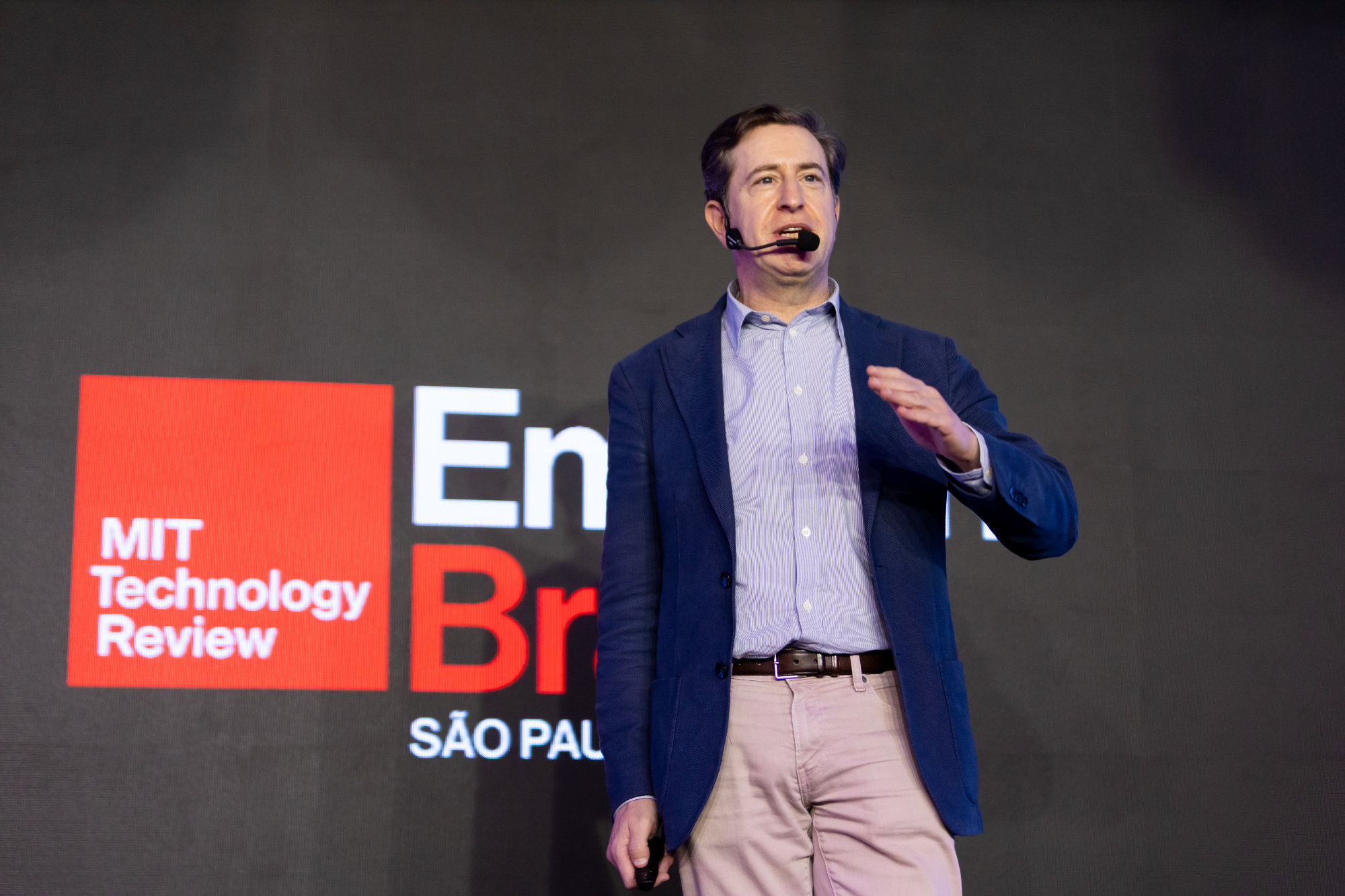
• Spitz, R. “Policrise ou Polipreparação? Conheça as metadisrupções”. MIT Technology Review Brasil, August 26, 2025. See https://mittechreview.com.br/policrise-ou-polipreparacao-metadisrupcoes/
VI. FOLLOW THE DISRUPTIVE FUTURES INSTITUTE
Based in San Francisco, the Disruptive Futures Institute pioneers futures intelligence, offering strategic foresight, practitioner research, and education to empower you to shape your futures in our unpredictable world.
► Disruptive Futures Institute Substack - Thriving on Disruption: Metaruptions Briefings: https://thrivingondisruption.substack.com
► Instagram: https://www.instagram.com/disrupt_futures / @disrupt_futures
► X: https://twitter.com/disrupt_futures / @disrupt_futures
► LinkedIn: https://www.linkedin.com/company/disruptivefuturesinstitute
The Disruptive Futures Institute recently launched “Thriving on Disruption: Metaruptions Briefings,” a new Substack publication designed to help leaders, boards, institutions and the public at large navigate systemic, self-reinforcing disruptions shaping the 2026 horizon and beyond.
Media Contact
Disruptive Futures Institute
email us here
Visit us on social media:
LinkedIn
Instagram
YouTube
X
Other
ROGER SPITZ OFFICIAL SPEAKER REEL 2026 | Global Futurist & Keynote Speaker


Distribution channels: Banking, Finance & Investment Industry, Business & Economy, Companies, Electronics Industry, IT Industry, Insurance Industry, Law, Manufacturing, Military Industry, Technology ...
Legal Disclaimer:
EIN Presswire provides this news content "as is" without warranty of any kind. We do not accept any responsibility or liability for the accuracy, content, images, videos, licenses, completeness, legality, or reliability of the information contained in this article. If you have any complaints or copyright issues related to this article, kindly contact the author above.
Submit your press release